Human dignity, liberty and the rule of law

History of Human Rights

Across centuries, thinkers, communities and reformers have asked what is owed to every person and what limits should bind power. This selective chronology follows natural law, liberty of conscience, constitutional government, emancipation and the modern human-rights framework. It also records the distance between principles proclaimed and protections enjoyed.

Hands of different generations carefully examining an old book and papers on a wooden table.
Illustration created for this timeline. Global Human Rights Institute © 2026 GHRI, protectable human-authored elements. Image rights.

539 BCE–1st century BCE

Ancient antecedents

  1. 539–538 BCE

    Cyrus and the limits of an ancient precedent

    After conquering Babylon, Cyrus ordered an inscription presenting his rule as a restoration of proper order. The cylinder describes the renewal of sanctuaries and the return of displaced communities and their gods. These policies are relevant to the history of toleration, but the object was a royal proclamation within an imperial society. It was not a declaration of equal individual rights. Calling it the first human-rights charter projects a modern category onto an ancient text and obscures its original purpose.
  2. c. 260 BCE

    Ashoka: restraint, welfare and religious respect

    Following the destructive conquest of Kalinga, the Mauryan emperor Ashoka expressed remorse in inscriptions across his realm. His edicts urged consideration for different religious communities, humane conduct, restraint in punishment and responsibilities toward relatives, servants and others. They show that concern for suffering and moral limits on rule developed beyond the Mediterranean world. Yet they remained commands and aspirations of an emperor, not enforceable guarantees of equal citizenship. Their significance lies in an early language of humane government and reciprocal duty.

  3. c. 54–51 BCE

    A law higher than the ruler’s will

    In his writings on the republic and laws, Cicero developed an account of justice grounded in reason and human nature. A rule did not become morally right simply because a government enacted it. This distinction between enacted law and a higher standard of justice became an enduring question in legal thought. Cicero’s arguments were philosophical antecedents, not a modern bill of rights. They nevertheless offered a way to judge political authority by standards beyond force, custom or the ruler’s preference.

Back to top

1215–1690

Law and conscience

  1. 1215

    Magna Carta and government under law

    King John’s agreement with rebellious barons placed written limits on royal power and addressed grievances about taxation, property and justice. Its protections against arbitrary punishment and denial of justice later acquired a much broader constitutional meaning. In 1215, however, the charter primarily served the interests of the Church, barons and free people within a deeply unequal society. It did not establish universal equality. Its enduring contribution was the principle that rulers could be bound by law, developed through later reissues and interpretation.

  2. 13th century

    Natural law, conscience and the common good

    Thomas Aquinas brought classical reasoning into dialogue with Christian theology in an influential account of natural law. Human law should serve the common good and answer to moral principles accessible through reason. Gravely unjust rules could fail to bind conscience in the way just laws do. This was not a declaration of modern religious liberty or equal political participation. It was a framework for examining the purposes and limits of authority, alongside the duties people owe to one another.

  3. 1628

    Parliament challenges arbitrary government

    The Petition of Right challenged taxation without parliamentary consent and imprisonment without lawful cause under Charles I. Parliament presented these demands as established liberties of the subject, linking present disputes to inherited legal protections. The king accepted the petition, but agreement on paper did not settle the struggle over authority. The episode illustrates a recurring problem in the history of rights: safeguards require institutions capable of insisting that executive power remain accountable to law.

  4. 1689

    A constitutional settlement with lasting limits

    The English Bill of Rights strengthened Parliament’s position against the Crown, defended parliamentary elections and debate, and affirmed petition and protections in criminal justice. These restraints helped shape later constitutional government. Its settlement was not religiously neutral: opposition to Catholic rule formed part of its political setting, and some provisions expressly distinguished Protestants. The document therefore belongs both to the history of limits on arbitrary power and to the history of exclusions that later generations would challenge.

  5. 1689–1690

    Natural rights, consent and toleration

    John Locke argued that people possess rights before government and that legitimate political authority rests on consent and the protection of life, liberty and property. His defense of religious toleration also challenged the use of force to produce genuine belief. These arguments gave later constitutional debates a powerful vocabulary. Their original application was incomplete: Locke excluded atheists and, on political grounds, Catholics from toleration. Studying both the principle and its limits reveals how claims to liberty could exceed their authors’ practice.

Back to top

1776–1791

Constitutional rights

  1. 1776

    Independence and the promise of natural rights

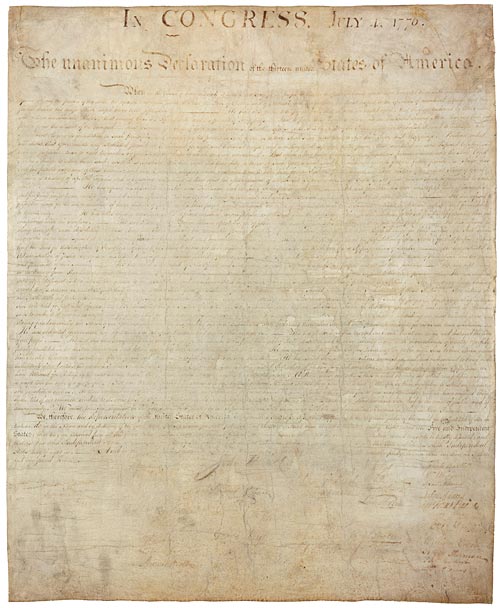
    The American Declaration of Independence grounded political legitimacy in inherent rights and the consent of the governed. Government existed to secure rights rather than create them at will; persistent tyranny could justify political change. The promise was far wider than its immediate application. Slavery continued, women lacked equal political standing, and Indigenous peoples did not receive the equality the language seemed to announce. The Declaration supplied a standard that later abolitionists, suffragists and civil-rights advocates could turn against those exclusions.

    The aged parchment Declaration of Independence, with its heading, handwritten text and signatures.
    The engrossed Declaration of Independence, 1776. Delegates began signing this parchment on 2 August, after adoption of the text on 4 July. National Archives, Record Group 360. Public domain.
  2. 1786

    Liberty of conscience in law

    Virginia’s Statute for Religious Freedom rejected compulsory religious support and civil penalties based on belief. Drafted by Thomas Jefferson and enacted in 1786, it treated the freedom to profess and argue religious opinions as a natural right. Its reasoning joined respect for conscience with limits on the civil magistrate’s authority. Religious conviction could flourish through persuasion rather than coercion. The statute became an important American expression of a principle whose protection must extend beyond whichever faith holds political power.

  3. 1789–1791

    Rights become constitutional guarantees

    France’s Declaration of the Rights of Man and of the Citizen connected liberty, property, security and resistance to oppression with law and accountable government. Across the Atlantic, the United States ratified its Bill of Rights in 1791, protecting conscience, expression and criminal-process safeguards while reserving undelegated powers. These texts offered distinct constitutional answers to the abuse of authority. Declaring rights did not itself ensure equal citizenship or end slavery; their meaning and reach remained subjects of prolonged political and legal struggle.

Back to top

1804–1920

Emancipation and citizenship

  1. 1804–1865

    Emancipation challenges the ownership of persons

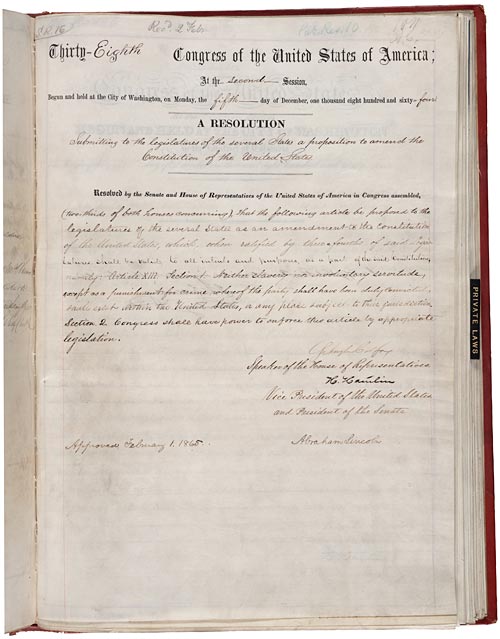
    Haitian independence in 1804 emerged from a revolution against enslavement and colonial rule. Britain prohibited its slave trade in 1807; legislation in 1833 began emancipation in most British colonies, with coercive apprenticeship lasting until 1838. The United States abolished slavery through the Thirteenth Amendment in 1865, retaining an exception for punishment after criminal conviction. These were distinct struggles, driven by enslaved people’s resistance as well as abolitionist organizing. Legal abolition was indispensable, but it did not automatically secure equal citizenship or economic independence.

    The handwritten congressional resolution proposing the Thirteenth Amendment, with officials’ signatures below.
    The congressional resolution proposing the Thirteenth Amendment, 31 January 1865. Ratification followed on 6 December. National Archives, Record Group 11. Public domain.
  2. 1864

    Humanity places limits on warfare

    The first Geneva Convention required care for wounded soldiers regardless of which side they fought for and protected medical services. Adopted in 1864, it helped establish modern international humanitarian law: rules governing conduct during armed conflict. That field is related to human-rights law but is not identical to it. The convention gave practical form to an important moral claim: an enemy’s vulnerability does not cancel his humanity, and military necessity does not remove every obligation of restraint.

  3. 1893–1920

    Women claim equal political voice

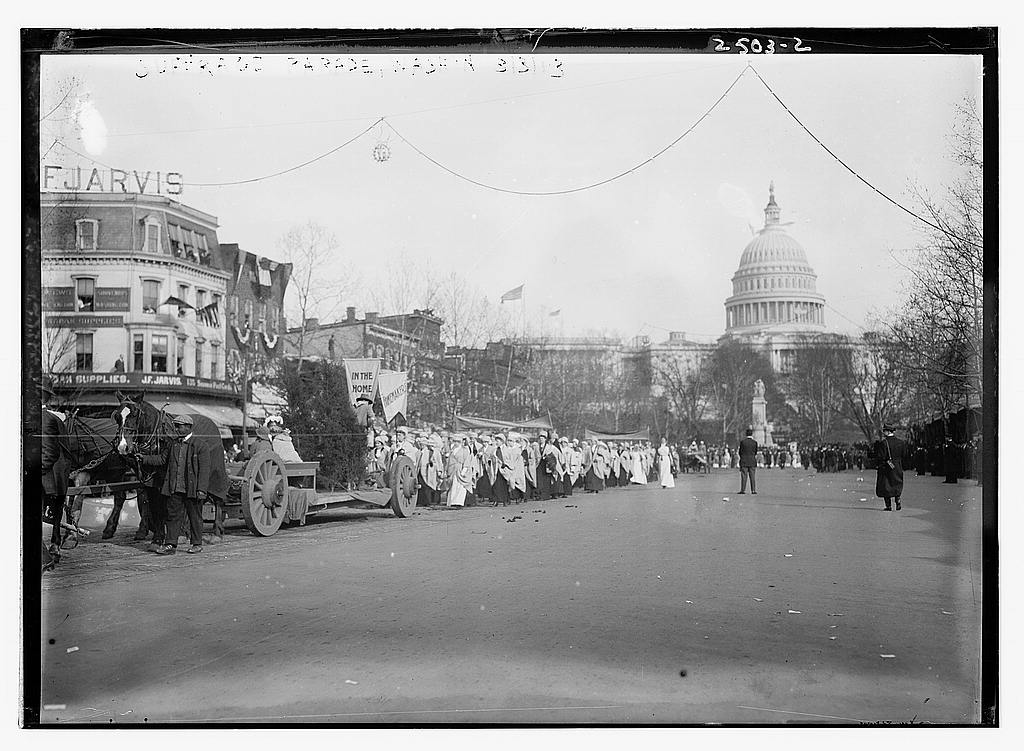
    Campaigns for women’s suffrage challenged the assumption that political citizenship belonged to men. In 1893, New Zealand became the first self-governing country to recognize women’s right to vote in parliamentary elections. The United States ratified the Nineteenth Amendment in 1920, prohibiting denial of the vote on grounds of sex. Neither milestone completed the work of political equality. Discriminatory laws still blocked many American women, particularly women of color, showing the difference between a constitutional guarantee and its effective enjoyment.

    Women walking in a suffrage parade with banners and a crowd watching from the street.
    A suffrage parade in 1913, photographed by the Bain News Service. The Library of Congress retains the original glass negative. Bain News Service / Library of Congress, LC-DIG-ggbain-11382. No known publication restrictions.
Back to top

1945–2008

Universal rights

  1. 1945

    Human dignity enters the UN Charter

    After the devastation of the Second World War, the United Nations Charter affirmed human dignity, fundamental rights and the equal rights of men and women. Signed in June and effective in October 1945, it made promoting human rights a purpose of international cooperation. The Charter also recognized sovereign equality and self-determination. It did not provide a complete catalogue of individual rights or erase colonial domination. It established an international commitment whose meaning and implementation would be developed through declarations, treaties and institutions.

  2. 1948

    A universal declaration and a duty to prevent genocide

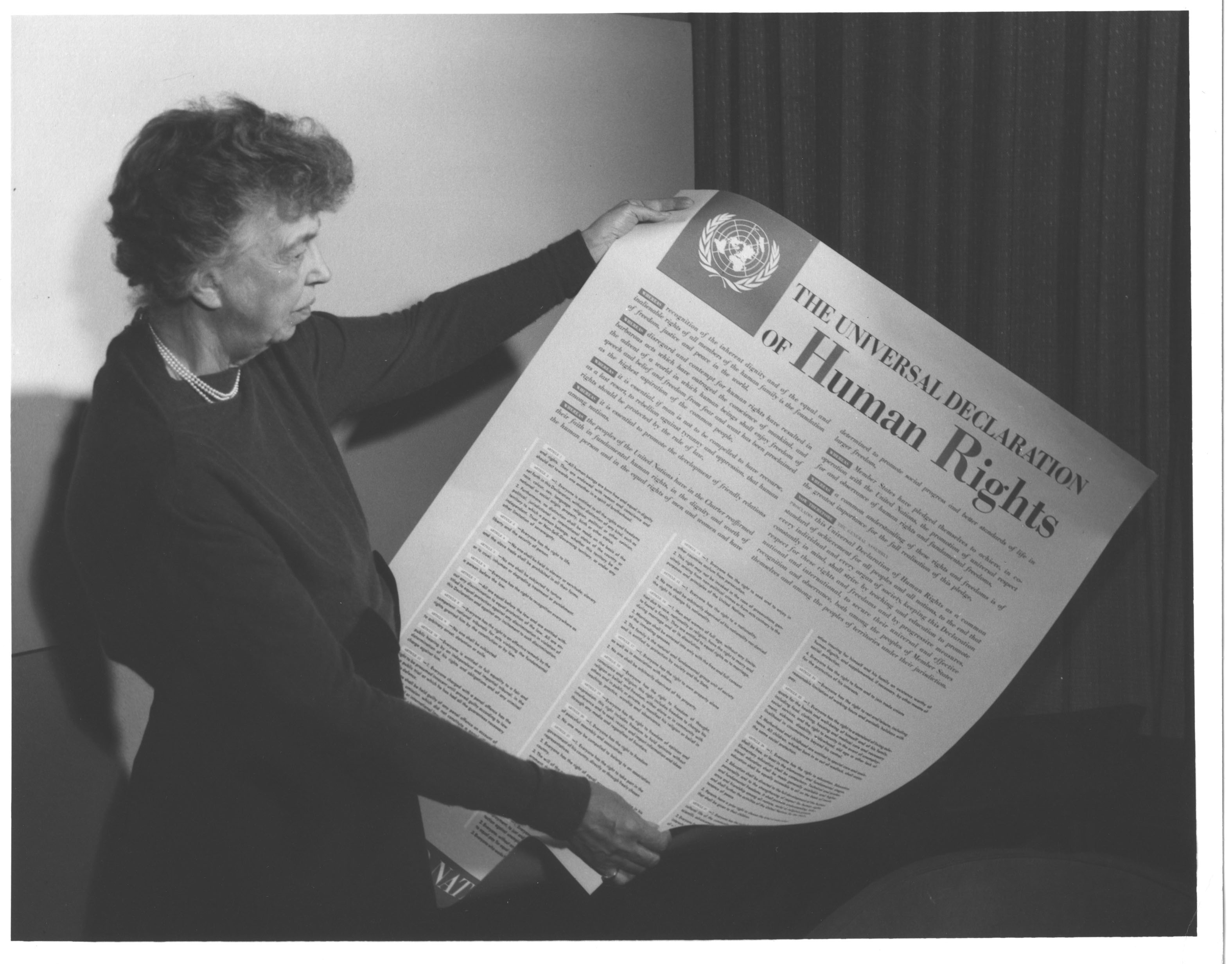
    On 10 December, the UN General Assembly adopted the Universal Declaration of Human Rights, presenting civil, political, economic, social and cultural rights as belonging to every person. Its principles joined dignity and liberty with duties to the community. The Declaration was not itself a treaty, but became a common standard for later law. A day earlier, the Assembly adopted the Genocide Convention, creating a separate treaty framework obliging its parties to prevent and punish genocide. Aspiration and binding legal obligations must be distinguished.

    Eleanor Roosevelt seated and holding an open printed copy of the Universal Declaration of Human Rights.
    Eleanor Roosevelt with the Universal Declaration of Human Rights at Lake Success, New York, November 1949—after its adoption in December 1948. Courtesy of the Franklin D. Roosevelt Presidential Library and Museum, National Archives, NAID 6120927 (NPX 64-165). Public domain.
  3. 1960–1965

    Self-determination and racial equality

    The UN’s 1960 Declaration on decolonization affirmed peoples’ right to determine their political status and called for an end to colonial rule. In 1965, the General Assembly adopted the Convention on the Elimination of All Forms of Racial Discrimination, which entered into force in 1969. These instruments addressed exclusions that had persisted alongside earlier proclamations of equality. They also raised a continuing test for new and established states alike: national independence must be accompanied by protection for the people and minorities within their borders.

  4. 1966 / 1976

    The international covenants create treaty obligations

    Adopted in 1966 and effective in 1976, two covenants developed the Universal Declaration into treaty commitments for states that become parties. The Civil and Political Rights Covenant protects freedoms such as conscience and expression, fair process and political participation. The Economic, Social and Cultural Rights Covenant addresses work, education, health and an adequate standard of living. Their obligations and methods of implementation differ. Together they connect liberty, material conditions and human dignity while making governments answerable for commitments they have legally accepted.

  5. 1993

    Universality across political and cultural differences

    The Vienna World Conference reaffirmed that human rights are universal, indivisible and interdependent. Its declaration recognized the importance of historical, cultural and religious backgrounds while insisting that every state must protect human rights regardless of its political or economic system. This was a statement of common responsibility, not proof that governments had fulfilled it. For serious scholarship, Vienna sharpens a useful distinction: understanding a society’s traditions can inform the protection of dignity without making grave abuses immune from judgment.

  6. 2006–2008

    Equal dignity and participation for persons with disabilities

    Adopted in 2006 and entering into force in 2008, the Convention on the Rights of Persons with Disabilities applies established human rights to barriers faced by persons with disabilities. Its principles include individual autonomy, participation, accessibility and equality of opportunity. The convention treats people as rights holders who make choices about their own lives, rather than merely recipients of care. It illustrates how a universal claim must become concrete through institutions, accessible environments and respect for the agency of each person.

Back to top